31.7.12

DE (CYBER)STRAAT ALS CATWALK VOOR EIGENZINNIGE MODEMANNEN


door: Marij Rynja (2011) 

"De straat is een plek waar mensen elkaar treffen, een sociale ontmoetingsplaats waar we elkaar bekijken en zelf bekeken worden, actief of passief.  Tijdens dit monitor-proces leren we ook meer over onszelf, van ons zelfbeeld in relatie tot de omgeving. Onbewust spiegel je jezelf aan anderen om jezelf te evalueren. Het is een aangeboren verlangen van mensen om jezelf te vergelijken en te spiegelen aan anderen [1].  Hoe je je als man of vrouw hoort te kleden, welke mannelijke modecodes leven in je omgeving, verzamel je deels door te kijken naar mensen in het dagelijks leven. Kleedgedrag is een performance van gender, van identiteit, van socialisatie. Hoe je jezelf naar buiten presenteert is een actieve en bewuste handeling [2].
            De straat is daarmee een belangrijke informatiebron voor het construeren van je eigen identiteit. Met name voor mannen blijkt uit eigen onderzoek dat de directe omgeving hem zijn belangrijkste modekennis verschaft. De straat is zijn modemoment waar hij leert over nieuwe ideeën van mannelijke modes, als mede hoe hij zichzelf van de heersende modes kan onderscheiden [3]. Terwijl mannen andere mannen op straat bekijken, denken zij: ‘O dat is geloof ik nu in de mode aan het komen. Is het wat voor mij? Hoe die meneer zijn pak draagt, vind ik cool, dat ga ik ook eens proberen’. Bij wijze van.
            Straat roept associaties op met dynamiek, representatie van de werkelijkheid, het werkende leven, de arbeidersklasse, een creatieve broedplaats, een plek van vrijheid. Maar de straat symboliseert ook gevaar, criminaliteit en overleven. De straat leeft en doet zo zijn eigen ding. Mede daarom heeft straatcultuur een sterke aantrekkingskracht op de mode-industrie. Hier valt veel inspiratie op te doen.
           

Bregje Lampe verruilt Het Parool na zeven jaar voor de landelijke Volkskrant - een interview met Bregje over haar rubriek STRAATSTIJL

Na het vertrek van Milou van Rossum als trouwgediende Volkskrant mode-redacteur, die overstapte naar de NRC, viel er enkele maanden nauwelijks iets te lezen in de Volkskrant omtrent mode. Gelukkig dient per 1 augustus 2012 zich een plaatsvervanger aan: modejournalist Bregje Lampe.  

Sinds 2008 schoof Lampe met haar Stijlbijlagen voor Het Parool en haar modespecials de Amsterdamse modecultuur naar voren en maakte deze voor een breed publiek in woord en beeld toegankelijk, onder andere via haar rubriek Straatstijl. In 2011 interviewde ik Bregje Lampe over de veranderende mannenmode die zij op straat aantrof en portreteerde, als onderdeel van mijn afstudeerconcept 'The Transgress Journal'. Wat maken deze mannen ons duidelijk over hoe zij hun visuele identiteit en hun mannelijkheid naar buiten brengen? Is mode eindelijk ook een mannelijkheidskenmerk geworden? Dit artikel is niet eerder verschenen, dus waarom niet nu op het moment dat Bregje definitief afscheid neemt van Het Parool: 

STRAATVERLICHTING
Modejournalist Bregje Lampe belicht de bijzonder geklede man op straat

door: Marij Elisabeth Rynja (2011, herschreven 2012) 
uit: The Transgress Journal #1

Iedere dinsdag viel hij bij mij op de mat: de PS stijlbijlage van Het Parool. Naast dat PS STIJL veel aandacht besteedde aan de Nederlandse modeindustrie, werd ook de gewone man van de straat in de schijnwerper gezet:  een volle pagina gereserveerd voor het Amsterdamse stijlportret, verrijkt met een kort interview over de opmerkelijke kledingstijl van de man of vrouw in kwestie. 

26.7.12

At Soepboer & Stooker you can still admire the graduation collections of Morta Griskeviciute, Poul Brouwer and Jolka Wiens of The Rietveld Academy 'MMXII' - mentored by Niels Klavers and Oscar Raaijmakers - UNTIL July 28th 2012


The Rietveld Art Academy in Amsterdam hasn't have a name when it comes to its fashion department and every year the number of graduates in fashion design declined, with probably this year as it's all-time low with just three fashion graduates. But better fashion times are coming. 
Since a year the fashion department has a new director, and not the least: fashion designer Niels Klavers. Together with another big fashion name Oscar Raaijmakers, Klavers trained and mentored the fashion graduates Morta Griskeviciute, Poul Brouwer and Jolka Wiens. These graduates told they had the best final year of their fashion education thanks to Klavers and Raaijmakers, because just being with three students you can get the most of attention and guidance, especially from two enthusiastic and professional teachers. 
The energy and quality of this years graduation collections is high and stood out in clear concepts, research process and experimentation. 
All and all, this year gave a new appeal to the Fashion Department of the Rietveld. Result: a dozen of future fashion students have chosen to apply for the Rietveld now instead of the better-known fashion academies out there.  

6.7.12

SALON/Workshop 'Amsterdam-Istanbul' - what are the designers working on for the Istanbul Design Biennial?


SALON/ ran a workshop targeted towards the transmission of designers’ works and ideas through visual presentations while collaborating with the creative industries, craftsmen and designers based in Istanbul. During the SALON/workshop, a round table discussion took place last March, whereby the designers communicated their works, ideas and philosophies via visual presentations and responded to the students’ questions. In this way a dialogue exchange was made possible between the designers and participating students.

The workshop provided opportunities of encounter between fashion and product designers such Mattijs van Bergen, Vroonland, Desiree Hammen, Hyun Yeu, BCXSY, Antoine Peters, Borre Akkersdijk, Noman and Reinier Bosch who travelled to Istanbul for this project, with various organizations and ateliers that could offer co-operation. These young and independent designers working on new ideas and techniques, shared their knowledge of legacy and craft, the significance of the unique, and the confrontational encounters between hand-crafting techniques and new technologies, with the artists, designers, craftsmen and producers of the creative industry in Istanbul. The sites visited by the designers and the students included the ateliers where the art of Ebru painting is performed, the Topkapı Museum which houses Turkish carpets, caftans and seating groups, leather ateliers, artisans’ shops in Tahtakale and the rug sellers in the Sultanahmet area.

In the period up to the Istanbul Design Biennial in October, whre SALON/ is part of, the designers will use their experiences and observations of the unique characteristics of Istanbul to create new products that pay homage to their originals by clearly revealing their ties to them.

At the Museum Willet-Holthuysen SALON/ lifts a corner of the veil to unveile what the designers are working on. Here we can see their progressions and research, a journey from idea to final product. The workshop was organized collaboratively by the Royal Netherlands Consulate and the Dutch DFA as part of the celebrations for the 400th anniversary of Dutch-Turkish diplomaitc relations, and was hosted by Material ConneXion Istanbul in Yapı Endüstri Merkezi.

Mattijs van Bergen investigates, decomposes and melts images of his previous four collections, in order to restore the parts into a renewed but still iconic Mattijs item. At the museum Mattijs reveals four paper collages representing his research process. 
<--


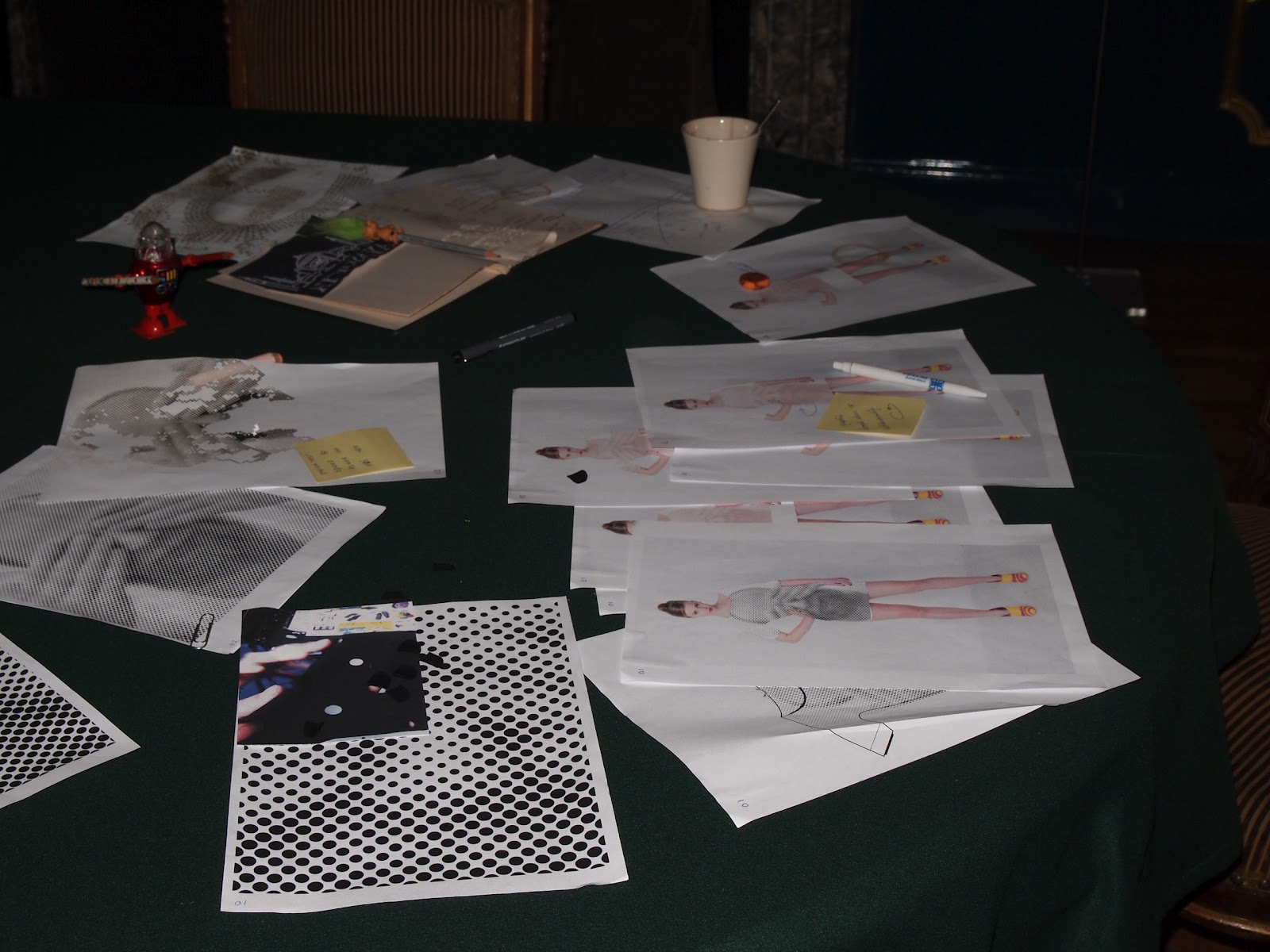
Placed on an antique diner table the scetches, drawings, grayons, inspiration images and Antoine’s coffee cup are right where he left it. Fashion designer Antoine Peters is working on a laser printed self portrait he calls ‘hide and seek’, referring to the revealing and concealing of laser cut and printout techniques. -->


Pauline van Dongen made contact with one of Istanbuls biggest industrial companies, which also develops and applies new production techniques and high tech materials. Pauline van Dongen’s sculptural scientific designs are made of materials not common in the fashion industry, what can transgress the possibilities of moulage and the appearance of fashion design as we know it.
<--


Traditional craft techniques are still a flourishing part of Istanbul’s rich culture. One of them is Gold Embroidery, a rare technique that has its origins in Turkey. Being specialized in this technique Desiree Hammen will explore it further as part of the SALON/workshop to combine contemporary and traditional embroidery techniques. Desiree Hammen shall create a conceptual altar where she honors our daily ‘industrial’ clothes and the clothes created by craftsmanship. In her research and in the garments she presents in the Willet-Holthuys her passion for craft is a key element, as well as the positive vibes of the encounter of the west and the east.
-->


Furniture label Vroonland challanged itself to re-invent the pouffe. Leading in the design process for Vroonland is the overall question: is a chair purely functional? In Istanbul Vroonland noticed people rather sit on the ground or on pillows than on chairs. How will a cross over between a Western chair and an Eastern pouffe look like and be confortable, using wicker-work techniques? Examining and exploring the means and usage of design classics will create new perceptions and functions. This eventually leads to a pedigree or an evaluation within the Vroonland collection.
<--


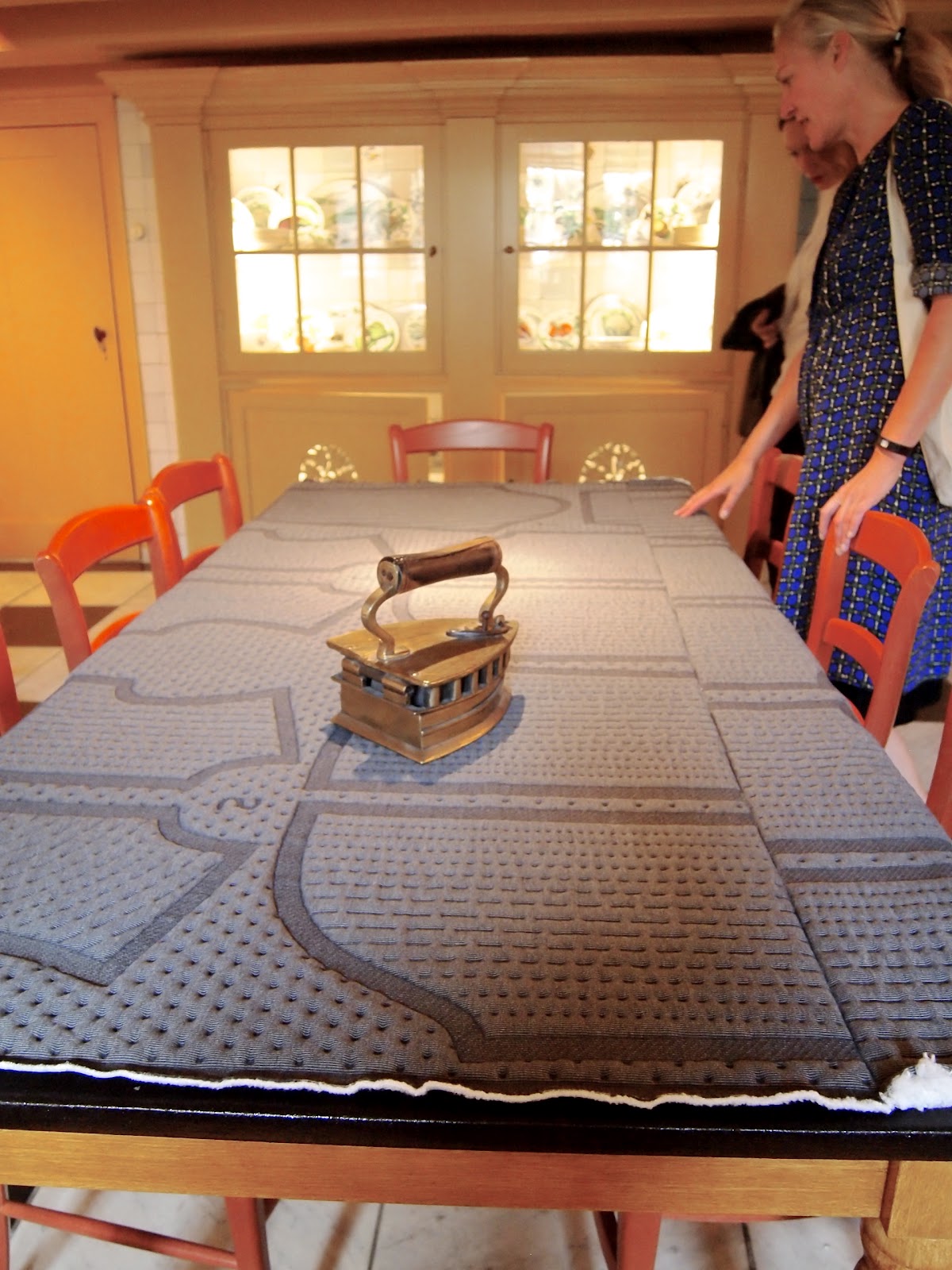
NOMAN presents the starting point for an installation called ‘Project Osman’. Intrigued by images of evolution fashion designer Selina Parr en set designer Lara Tolman of NOMAN decided to make a mutation of a traditional Turkish carpet into five steps. They analysed its patterns, colours and images and gave these elements a contemporary, abstract interpretation. The rectangle flat shape of the carpet will evoluate into a 3D object, using rubber, a modern counterpart of the traditional knotted carpet. The knots are replaces by wood for connection. The rubber parts of the object shall also serve as a contra product to accentuate the tension between hand work and machine work. --> 

Borre Akkersdijk has a thing for thickness, volume, knits and double weaves. He is driven by the idea to transform something two dimensional into a three dimensional item. For SALON/TR he developed double knitted fabrics, the patterns of a jacket sticked into it.
<--


Istanbul has captured the western imagination for centuries; especially the boundaries between private and public fascinated the West. Looking at what was not supposed to be seen was a particular popular theme in the arts during the 18th and 19th century’ Europe and formed the base of a romanticised idea about the East. This historical data has been the inspiration for the installation of Studio Reinier Bosch. It is a study of the process of looking and being looked upon; the way the outer world looks at you and the way you look at the outer world. The room divider reflects the fine-grained boundary between realities and cultural images, it mirrors the play of cultural image-forming, and invites the redefinition of a cultural image. Design: Studio Reinier Bosch; Research: Marleen Folkerts; Thanks to Kim Amankwaa, Anil Van Der Zee, and Hyun Yeu.  -->


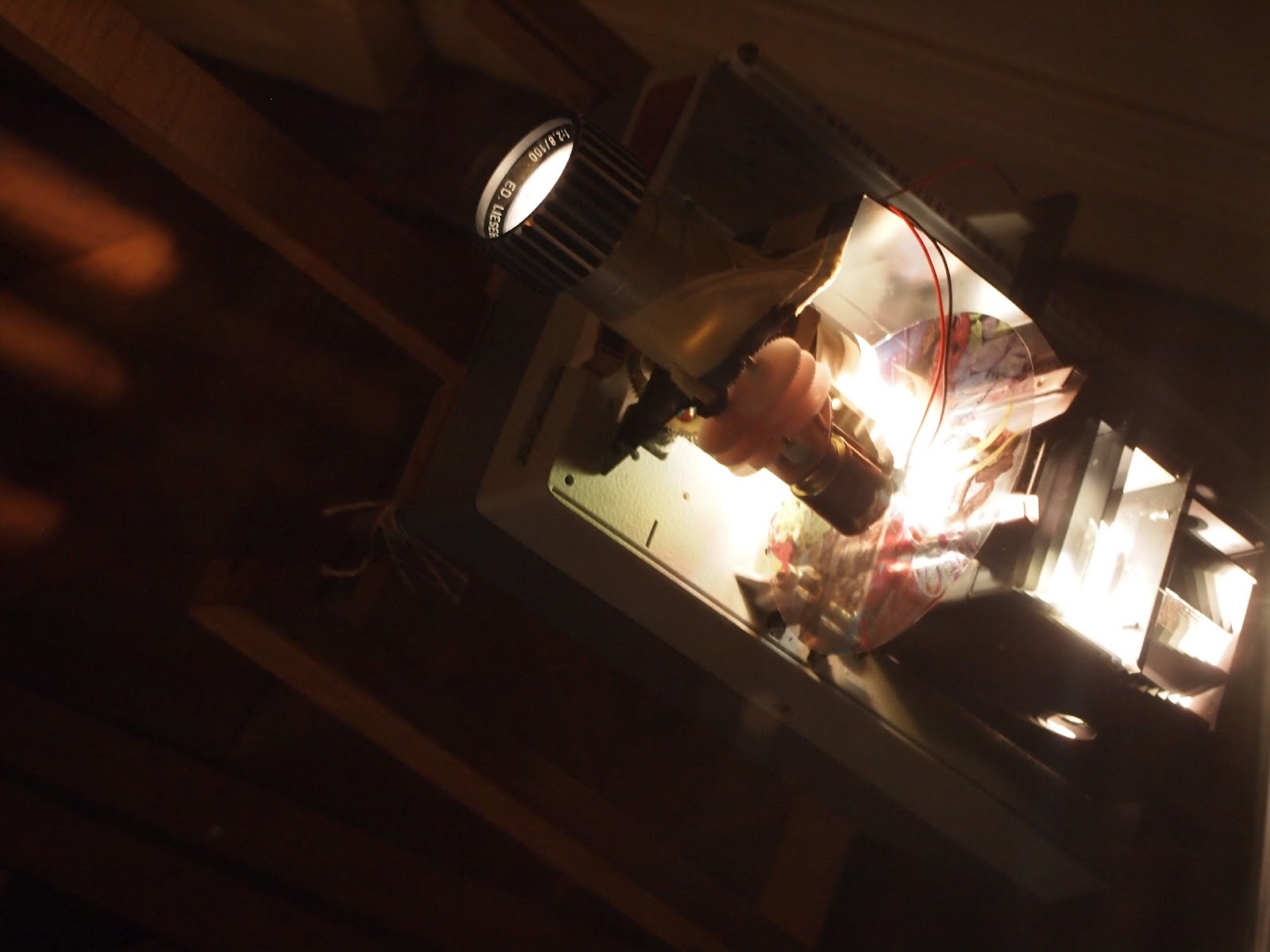
<-- Turkish Delights is an installation by BCXSY. BCXSY is a balanced combination of two unique talents (Boaz Cohen and Sayaka Yamamoto) creating multidisciplinary experiences through the creation and development of concepts, identities, products, graphics, interiors and atmospheres. For SALON/TR they created a kaleidoscopic projection of food images, collected in Istanbul, projected on the ceiling of the Willet-Holthuysen's dining-room, using a modified old slide-projector. Food, as a organic product, is an important element in their work in general. And food is strong related to a culture. Their passion for food is their way of getting familiar with other cultures.

pictures by Marij Rynja


Previous blogpost on the SALON/ amsterdam-istanbul workshop visit this link: http://salon1amsterdam.blogspot.nl/2012/05/pictures-taken-by-participants-pre.html

19.6.12

TIP: exhibition 'High Fashion-Low Countries' - July 13, 14, 15 - 2012 @ Nes 45, Amsterdam

High Fashion Low Countries will be presenting the work of six Dutch and Belgian designers at The Flemish Arts Centre 'De Brakke Grond' in Amsterdam (NL). Why? 

The creative industry, more specifically fashion, architecture and design, is a major focus point for the Dutch Foreign Economic and Cultural policy. The Netherlands Embassy in Brussels has converted the rising attention for these topics into specific events over the last years, such as the Dutch Design Days in 2008 and the Benelux Architecture Days in 2010.
In 2012, fashion will be in the spotlight. Over the last years, themes of sustainability and slow fashion have gained a lot of attention in the fashion industry. Therefore the embassy will incorporate these themes in its upcoming event. At the same time the focus on sustainability and slow fashion perfectly fits within the ‘bio-based economy’ activities undertaken by Department for Economic Affairs of the Embassy. This will be translated into different activities on fashion and textile.
The events for 2012 will take place in Brussels, Antwerp and Amsterdam. The embassy has a twofold objective: firstly, strengthening existing partnerships between Belgium and the Netherlands; secondly, connecting relevant actors in the sector such as students, teachers and designers in order to share knowledge and expertise on durability and entrepreneurship. 
Sustainable development, craftsmanship, the use of alternative materials and a less-seasonal view on fashion have gained attention amongst entrepreneurs and emerging designers in both countries. The new luxury market demands for long lasting and sustainable products. These products could be created through reinventing traditional crafts, researching on alternative materials and using new technologies and local resources.
This working ethos gains more and more followers in the Dutch and Belgian markets and this places both countries at the forefront of a new fashion trend.
With this project they aim to support outstanding Dutch and Belgian talent working in this field and encourage more development and knowledge sharing.

The project High Fashion Low Countries will be on view for the first time through a capsule exhibiton at the cultural venue 'De Brakke Grond' (adress: Nes 45) from July 13th – 15th (free admission) in collaboration with The Green Fashion Competition and Amsterdam Fashion Week.  
As second stop, the project will travel to Antwerp during the first week of October for a series of lectures programmed in collaboration with Flanders Fashion Institute (FFI) on the 11th of October. 

Participating designers are:
-Pauline van Dongen (NL)
-Natalie de Koning (NL)
-Jantine van Peski (NL)
-Katrien van Hecke (B)
-Lena Lumelsky (B) and
-Celine de Schepper (B)
More information: www.highfashionlowcountries.com 
(text by High Fashion-Low Countries. Curated by Eve-Marie Kuijstermans and Javier Barcala)

TIP: Antwerpse MoMu Award 2012: Manon Kündig - Mannelijke prieelvogels verpakt in pretentieuze stoffen

 
Elk jaar reikt het ModeMuseum een prijs uit aan een masterstudent van de modeafdeling van de Koninklijke Academie, Artesis Antwerpen. Deze prijs, die in juni overhandigd wordt tijdens de proclamatie van de jury, biedt een student de mogelijkheid om zijn of haar afstudeercollectie te presenteren in een tentoonstelling in de MoMu-galerij. De MoMuprijs wordt toegekend aan een student die gedurende zijn of haar studieperiode een boeiend parcours aflegde en wiens werk opvalt omwille van een unieke beeldtaal. 


De MoMu Award 2012 wordt uitgereikt aan Manon Kündig(zie beeld), met de collectie 'Bowerbird': 
De mannelijke prieelvogel, een klein wezentje dat het vrouwtje verleidt door een vreemde compositie te maken van zowel natuurlijk als synthetisch restafval, met als bedoeling zijn creatief talent te demonstreren, is een echte freak of nature. Hij vormt ook de centrale inspiratie voor de eclectische silhouetten in deze collectie.

'Door het mixen van goede en slechte smaak, onbewuste mode en  mannelijke pronkzucht, toont de collectie hoe schone schijn ophouden op een creatieve en spontane manier kan gebeuren.'

Stoffen die pretenderen iets te zijn wat ze niet zijn, camouflageprints die niet zijn wat ze lijken, namaak carré foulards die tot jas omgetoverd worden, in Kündig’s wereld liggen afval en haute couture niet ver uit elkaar.  

Net zoals de prieelvogel, keek Manon Kündig ook naar haar buren voor inspiratie: als Zwitserse in Borgerhout, integreerde ze typische versieringen materialen en silhouetten die men kan vinden in de culturen van dit district en vele andere. Als een volleerde pick-up artist, verzamelt Kündig inspiratie vanop eender welke plek waar ze er vindt, waarmee ze de schoonheid toont van l’art du hazard. 

De installatie van de MoMu Award 2012 loopt van dinsdag 12 juni tot en met zondag 14 oktober 2012 in de MoMu Galerij in Antwerpen en de toegang is gratis.   

Hieronder de video van de graduationshow van de Antwerpse Fashion Department 2012: 

MODEKERN - Institute for fashion heritage is coming next year! A professional image archive to preserve substantial Dutch fashiondesign


Modekern is an initiative of Premsela, the Netherlands Institute for Design and Fashion; ArtEZ Institute of the Arts; the Museum voor Moderne Kunst Arnhem; and the Gelders Archief.

WHAT IS MODEKERN?

Modekern collects, provides access to, studies and exhibits the archives of internationally significant Dutch fashion designers in order to broaden and deepen understanding of modern Dutch fashion history. Modekern is an initiative of Premsela, the Netherlands Institute for Design and Fashion; ArtEZ Institute of the Arts; the Museum voor Moderne Kunst Arnhem; and the Gelders Archief. It avails itself of existing infrastructure based on each organisation’s strengths and expertise. Modekern receives support from the city of Arnhem and the province of Gelderland.
Modekern exhibits designers’ sketches, clothing-making techniques, and look books, invitations and other publicity materials online and in physical space. Designers, students and amateur fashion designers can use the archives for study and inspiration. Modekern Arnhem organises exhibitions of acquired materials and operates an educational programme for technical colleges and secondary schools.
So far, Spijkers en Spijkers, Piet Paris and Alexander van Slobbe have promised to provided their archives. Each has played a crucial role in the evolution of Dutch fashion.
www.modekern.nl 

For the Dutch readers: Lees ook het stuk van modejournalist Georgette Koning over het archiveren van Spijkers & Spijkers door Modekern, klik HIER 

about my work for SALON/

Since the beginning of SALON/ - formerly known as SALON/1 - I support this one of a kind fashioncultural platform. Started as a volunteer, I informed visitors and tried to start discussion on the curent fashion culture in the Netherlands or about what the visitors on that specific location admired, but since 2011 I'm the official blogger of SALON/. In Juli 2012 another SALON/ will take place with a special role for Turkisch fashionculture. Please, look at the blogs I post on www.salon1amsterdam.blogspot.com  or visit www.salon1.org to learn more on SALON/.


11.6.12

Fashionmasters ArtEZ presents their graduation students in a fashionvideo called No Show....what happened? See the clip


NO SHOW: A SHORT FILM BY ARTEZ FASHION MASTERS AND TEAM PETER STIGTER
For the new crop of fashion and shoe designers graduating from the Fashion Masters of ArtEZ Institute of the Arts, Team Peter Stigter developed the film NO SHOW. This short film presents the fashion show which displays the students' graduation projects in a sparkling setting of both backstage and onstage visuals. Better than a live fashion show, NO SHOW is thus the perfect springboard for an international fashion career. NO SHOW is on view during the exhibition Basic Instincts, Dutch fashion in context by Premsela, The Netherlands Institute for Design and Fashion and Museum for Modern Art Arnhem (MMKA). Exhibition: Saturday 2 June through Sunday 29 July 2012, Eusebiuskerk, Kerkplein 1, Arnhem.

28.5.12

MOAM - a cross-polliniation on Dutch fashion and it's disciplines.


The past sixty years have been very successful for the Dutch fashion-scene, according to MOAM. MOAM is a special exhibition concept of Martijn Nekoui which he created for his graduation at AMFI. Nekoui asked 24 contemporary fashion editors, designers, writers and artists to create a personal 'translation' of the work of twelve icons of Ducth fashion history. This marvelous concept of creating a bridge between the past and the present resulted in matching combinations and translations:


Avenue Magazine (1967-1994) by Frans Ankoné translated by Sonny Groo and Marco van Rijt;
Fashion illustrator Constance Wibaut (1920) translated by Georgette Koning;
Make-up artist Ellis Faas translated by Inglot Cosmetics;  
Fashion designer Frans Molenaar translated by Jan Boelo;  
Fashion designer Fong Leng translated by MaryMe-JimmyPaul;  
Topmodel Linda Spierings translated by Marte van Haaster;  
Painter Marte Röling (1936) translated by Martine Johanna;  
Art Personality Mathilde Willink (1938-1977) translated by Aynouk Tan;  
Photographer Paul Huf translated by Petrovsky & Ramone;  
Fashion designers Puck & Hans translated by Nelleke Strijkers and Wouter van den Brink; 
Fashion designers Viktor & Rolf translated by Winde Rienstra. 


The original piece and it's contemporary translation will be exhibited side by side to create a cross-polliniation on Dutch fashion and it's disciplines.  

FAQS: 
date: June 15 till June 30 2012
location: Gallery Fontana Fortuna /  Keizersgracht 105 / Amsterdam
opening time: Thurday - Saturday 14:00 - 18:00 h 

13.4.12

Damien Hirst neemt een loopje met de kunst-industrie - kunst voor de patjepeeër of nieuw-dadaisme?

a thousand years (1990)
Groot aangekondigd: de overzichtstentoonstelling van kunstbarbaar Damien Hirst in het Tate Modern. 


Zelf noemt Damien Hirst het een tussententoonstelling van zijn werk dusver, want hij zit in de prime van zijn kunstenaarsbestaan.  

Ik was in Londen tijdens Pasen, de expo was net dat weekend open gegaan. Ondanks dat je verwacht in lange rijen te verzeilen of het risico loopt dat de tentoonstelling voor die dag uitverkocht is - ja, dat kan blijkbaar als je Damien Hirst heet - heb ik alles in een rustig Tate kunnen bewonderen. Kwestie van de mogelijkheid aangrijpen om 's avonds naar het Tate te gaan, open tot 22:00 uur wat blijkbaar veel mensen niet weten.  

Iedereen kent deze omstreden kunstenaar dankzij zijn absurde kunstwerk 'For the love of God' uit 2007: een schedel versierd met diamanten ter waarde van ruim 15 miljoen pond. Ik had dit werk jaren geleden kunnen bewonderen in het Rijksmuseum, was het niet dat de hype rondom dit object mij totaal niet aansprak. Een schedel met diamanten: so what.  

Maar toch heb ik dit bizar luxe object nu ook bewonderd, in het Tate. In een grote zwarte doos omringt met bewaking en camera's dromden wij ons om het glazen kistje waar de schedel schitterde van eenzaamheid. De mensen gingen pas weg als de bewaking besloot dat het welletjes geweest was. De schedel zakte weg en verween uit het zicht.  

Onbekend met het werk van Hisrt - bewust of onbewust heb ik deze kunstenaar genegeerd - kon ik nu kennis maken met dit marketingwonder van de kunstwereld. 
Veel van zijn werk heeft Tate weten te lenen van Hirst zijn anonieme clientèle, maar ik begreep dat niet alles wat hij heeft gemaakt tijdens deze tussententoonstelling te zien was, helaas. 
Terugkerende thema's in zijn werk zijn de Levensloop en het Hedonisme, vertaald naar een balans tussen leven en dood. 
Als student bezocht hij voor zijn tekenvaardigheden het mortuarium of een laboratorium waar lichaamsdelen en hoofden voor de wetenschap werden gescalpeerd en onderzocht. In de eerste zaal is bij wijze van zelfportret een jeugdfoto van Hirst waar hij poseert met een afgehakt hoofd van een man. Je ziet dat de jonge Hirst het heel spannend vond en ook eng. Maar het is duidelijk dat zijn fascinatie voor dode objecten er vroeg in zit. 

Een van de trekpleisters van het museum is de haai in een sterk water bassin, waar niet zozeer het object zelf als wel de titel, het concept, indruk maakt. De haai gaat door het leven met een prachtig geformuleerd etiket op zijn naamkaartje: 'The Physical Impossibility of Death in the Mind of Someone Living' (1991). Een paradoxale zin, het aanschouwen van een natuurkundig onmogelijke representatie van Dood in het hoofd van iemand die leeft. Je ziet als levende een dood object maar geplaats in een natuurlijke pose, zwevend in het water. Je weet dat het dood is, maar Hirst doet het voorkomen of het nog leeft.  

black sun (2004)
Een geniaal uitgevoerd concept vond ik de installatie 'A thousand years' (1990), waar de levensloop wordt verteld met behulp van bromvliegen. De gelukkige planten zich voort en voeden zich met het karkas, de minder gelukkige vliegen vinden de dood via de elektrocutie-lamp. Wat de vlieg niet weet is dat hij als dood lijkje vervolgens terecht komt in een nieuw kunstwerk (gatver), genaamd Black Sun (2004), een circel met een diameter van drie meter beplakt met een dikke laag bromvliegen. Een zweem van verbrand eiwit geurt het kunstwerk. 
Ook voor het werk met levende vlinders verbeeldt hij de pracht en de pech van het leven. Het ontpopt tot vlinder,  fladdert rond tot het of dood op de grond valt of geplakt raakt vliegend tegen een nat canvas en zijn vleugels vermengen met de verf (Let us Pray, 2007). Resultaat: of de vlinder wordt onderdeel van een nieuw kunstwerk - ze bepalen zelf de plek op het doek - of de vlinders worden verwerkt in een soort glas-in-lood doeken, genaamd Doorways to the Kingdom of Heaven (2007) waar de exotische vlindervleugels in al hun kleur en variatie zorgvuldig in een symmetrisch patroon zijn gecomponeerd. 
doorways to the kingdom of heaven (2007)


En dat is eigenlijk waar m.i. Hirst vooral mee scoort: zijn concepten en zijn titels. De uitvoering zie ik niet als kunst, maar als decorstukken van een schouwspel dat wordt opgevoerd. Je hoort mensen denken: 'zo dat gaat diep' en men interpreteert erop los wat Hirst ermee zou kunnen bedoelen. En dat is precies wat Hirst volgens mij zo een plezier geeft in het maken van zijn 'kunst': De Mind Fucking van de kunst-intellecten.
150 mensen heeft Hirst in dienst om zijn werken te maken. Is dit dan nog wel kunst? Hoe meet je de authentieke waarde van zijn werk als het niet door hem zelf is vervaardigd? 

Kunstenaars als Hirst zijn kunst-entrepreneurs waar de naam van de kunstenaar als merk fungeert, als statussymbool, vergelijkbaar met een groot modehuis. Eigenlijk heeft Hirst een soort kunst-huis  gecreëerd. Zet hij zijn naam eronder, komt het uit zijn fabriek, dan is het goed...en vooral heel duur. Het is, net als vrouwen en hun designer tassen bijvoorbeeld, pochen onderling dat je een echte Damien Hirst hebt gekocht...dat je die 'gewoon' in de museumshop van het Tate of online via de website van Hirst hebt kunnen kopen daargelaten. Het is zoals ik het noem patjepeeërkunst, kunst om mee te pochen, zoals Jort Kelder 'zijn Hirst' toont in een uitzending van DWDD. Maar ook is het een vorm van dadaisme, een verwerping van de status quo van kunst door anti-kunst te cultiveren.

Ik kan mijn vinger er niet helemaal op leggen of ik het geniaal of troep vind. Of geniale troep. Het balanceert tussen kunst en commercie, schoonheid en sadisme, eenvoud en complexiteit. 

Het is denk ik typische kunstbeoefening zoals de 21e eeuw deze kent. Ik moest bijvoorbeeld denken aan Marcel Wanders of Studio Job en vergelijkbare kunstenaars die de glitter en glamour van de luxe industrie aan zich hebben weten te binden en elk object kunnen verkopen als 'must-have'. Denk aan de One Minute Sculptures van Marcel Wanders. Binnen 1 minuut kleit wanders een willekeurige vorm, verguld deze in goud en zet het te koop voor 500 euro met het verhaal dat je er zeker van kan zijn dat a) hij het heeft gemaakt en b) het een 'one of a kind is', niemand zal dezelfde vorm hebben. 

Marketing, dat is de kunst.